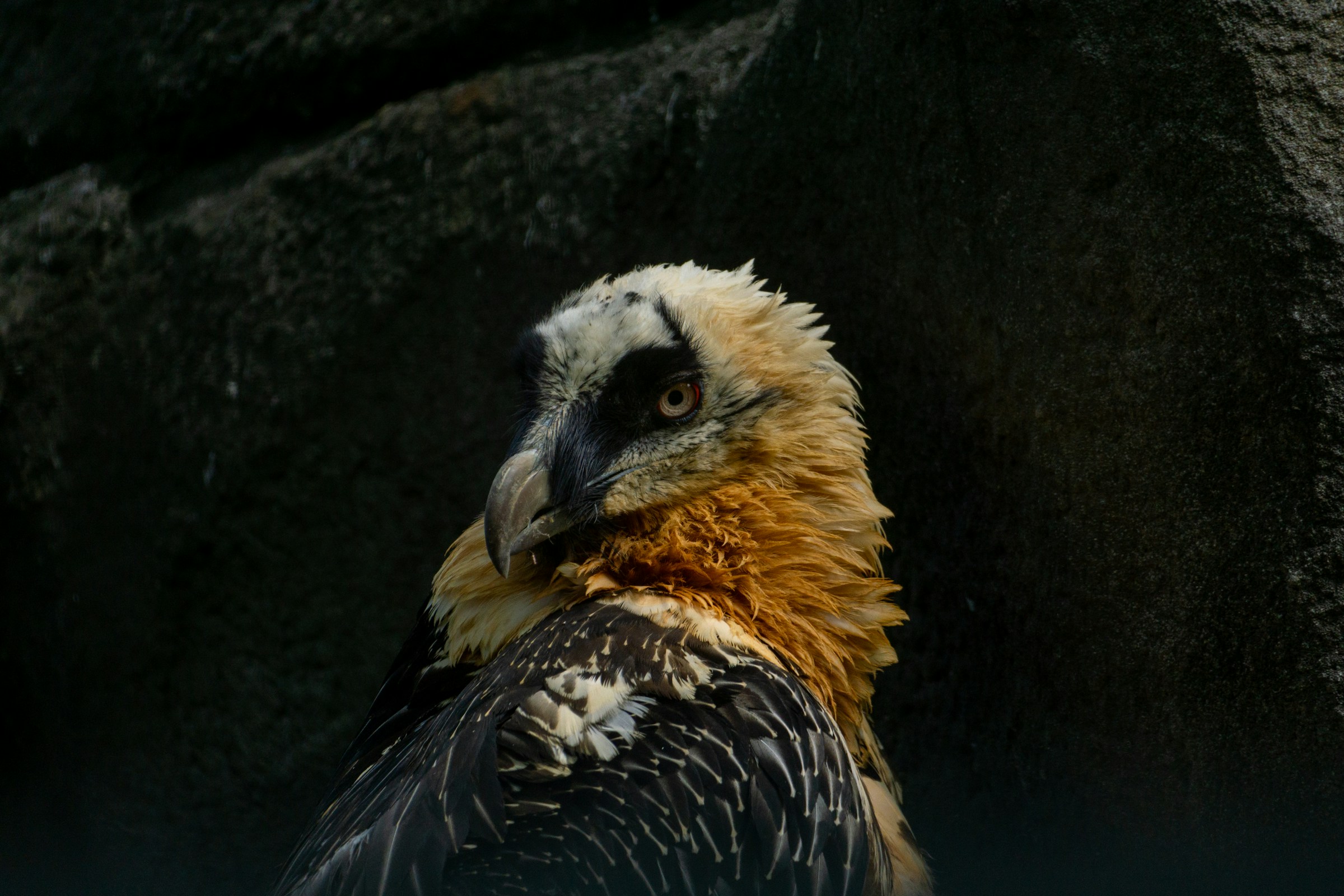
Gypaetus barbatus
| Kingdom: | Animalia |
| Phylum: | Chordata |
| Class: | Aves |
| Order: | Accipitriformes |
| Family: | Accipitridae |
| Subfamily: | Gypaetinae |
Mountainous regions of eastern Europe, Asia, and Africa. Individual birds have been known to extend their range into parts of western Europe and less mountainous areas of Africa.
Near Threatened.
Bearded vultures were locally extinct in the Alps by the 1930s, but efforts reinstate them began in the 1970s and has seen enough success to consider the species reestablished.
The Neat Stuff
Like most vultures, the bearded vulture is a scavenger, although it is more likely than others of its kind to hunt live prey. In service of this method of sustenance, the bearded vulture can swallow bones whole or crack those that are too large. For bones that are too large even to crack with its beak, the vulture will attempt to break the bone by dropping it from high above the ground. This is a practice that takes time to master — about seven years for a vulture to get the hang of it.
Since bearded vultures can subsist off of the protein in bone marrow, a bearded vulture can leave a carcass on a mountain where it will dehydrate, thus preventing bacterial degradation. It can then come back well after all the soft parts have been consumed and still find nutritional value in the remaining skeleton.
A bearded vulture lives to an average of about 21 years in the wild, but captive birds have lived up to 45 years.
Bearded vulture nests are used for centuries by multiple generations, should the nest remain a viable place in that time. This was discovered when a nest was found in a region of Spain where the birds are now considered extinct, containing shoes spanning from the 13th to 19th centuries.