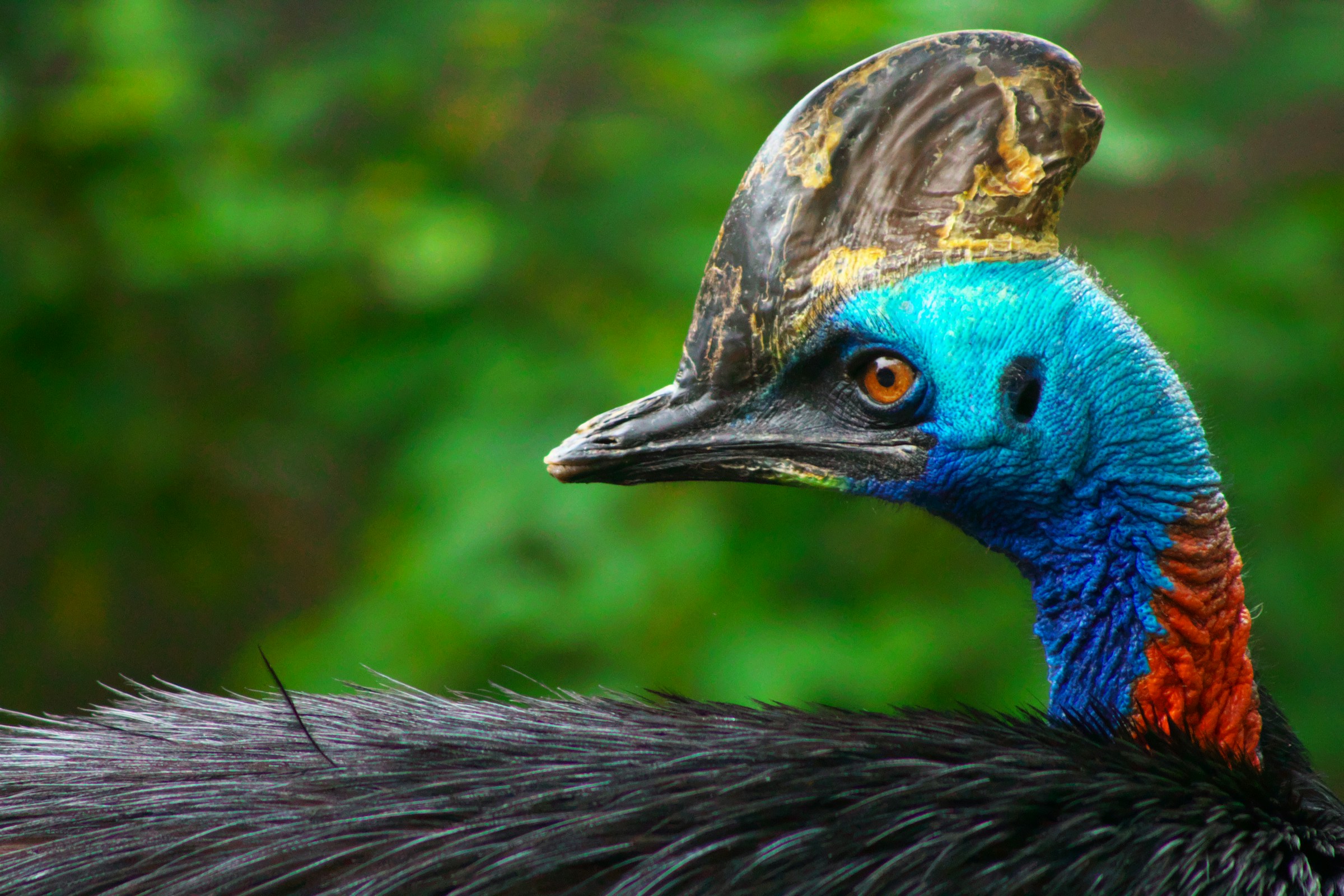
Casuarius casuarius
| Kingdom: | Animalia |
| Phylum: | Chordata |
| Class: | Aves |
| Infraclass: | Palaeognathae |
| Order: | Casuariiformes |
| Family: | Casuariidae |
| Genus: | Casuarius |
Cassowaries typically live in tropical rainforests, but they will spread out to neighboring savannah forests and mangrove stands. As for the range, they can be found in Papua New Guinea, Indonesia, and northeastern Australia.
Least Concern per the IUCN, but Endangered per the EPBC Act in Australia.
The Australian population is most threatened, but all are subject to habitat loss and overhunting. Another large problem is feral animals eating their eggs.
The Neat Stuff
Cassowaries as a whole have a reputation for being dangerous to humans — and certainly the potential is there with strong kicking legs — but actual attacks are very rare. Only two people have suffered fatal attacks since 1900, and in a historical study in 2003 it was found that 75% of the recorded attacks came from birds that had been fed by humans and were searching for more food.
Back to those powerful legs; southern cassowaries may be flightless, but they can run up to 31 miles per hour. They can also swim well.
Recently, cassowaries have been discovered to glow under ultraviolet light. Interestingly, the southern cassowary glows with different patterns than northern cassowary groupings.
The chicks hatch fully feathered and able to explore within just hours of hatching. They are taken care of solely by the male cassowary until they can be fully independent, which is around 9-12 months.