Question 1
Read “Selecting Digital Media for Your website” chapter from the text “Web Design Basics for Educators.” Provide three things you learned.
Copyright protection begins immediately after new content is creation, which means that almost all online media is potentially copyrighted and cannot be assumed free to use.
Copyright exceptions include fair use (the right to use a copyrighted work without permission under certain conditions), Creative Commons (licenses allowing for a work to be used with implicit permission according to a set of instructions), and of course material that is in the public domain and therefore not under copyright at all.
CRaN is an acronym that is useful for determining whether to use an image: evaluating whether it is Clear, Relevant, and Natural.
Question 2
Read “Multimedia Design” chapter from the text “Web Design Basics for Educators.” Provide three things you learned.
Primary advantage: the use of pitch, tones, and inflection to match the context where text may fall short.
Primary advantage: provides another means of engagement with the information in an appealing way, if designed well.
Primary advantage: they are more impactful and memorable than text alone.
Question 3

What is copyright?
The legal system protecting original works “in any tangible medium of expression” so that creators may benefit financially from their work, control the use of their work, and assert a right to attribution.

How do we ensure we are not violating copyrights when using images or multimedia elements from the web?
First determine the copyright status of the media in question to evaluate the possibility of using it, then assess whether any exceptions are in play, review the licensing terms, or (if so desired) reach out to the creator for direct permission. Never just assume that something from the web is free to use.

How does branding affect the use of images, color, and multimedia? Provide examples.
Branding sets up a framework for the use of design elements like images, color, and multimedia so that a consistent visual identity can be maintained wherever a person may interact with the brand (like a website).
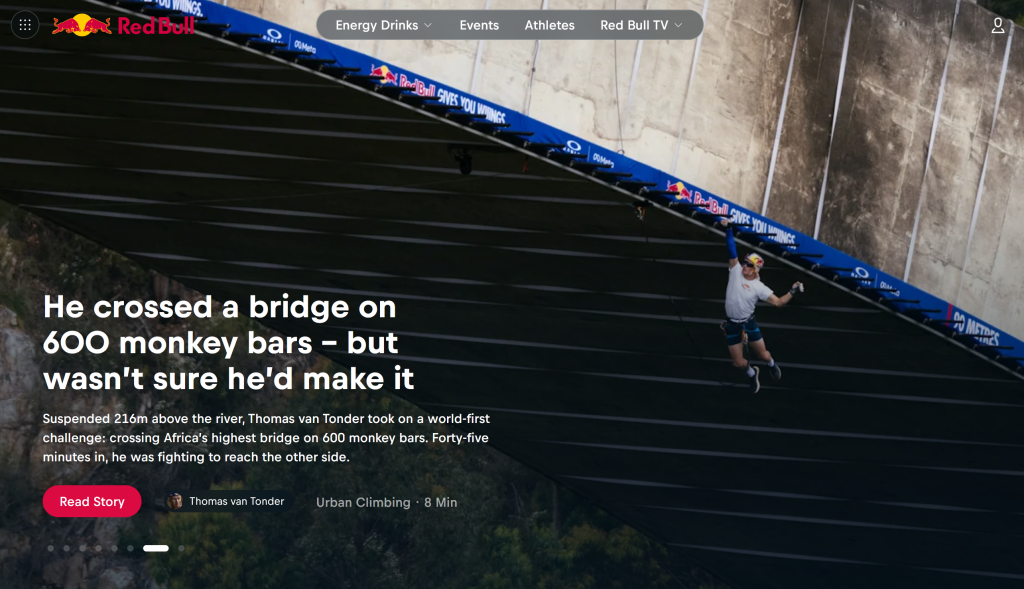
For example, Red Bull uses exciting multimedia imagery along with its product displays to show off the high-adrenaline intensity they want to communicate with their brand.

How does images, multimedia affect the design of websites?
Taking a multimedia approach to web design can make a website more engaging, accessible, and memorable. Visuals like images are proven to be more impactful to the viewer than text, and video/audio provide alternative and often creatively interesting ways of accessing information.
Question 4
Create a list of 5-10 online resources for images, multimedia that anyone could use without violating any ethical or legal or copyright laws.
- The Library of Congress: https://www.loc.gov/free-to-use/
- The Public Domain Image Archive: https://pdimagearchive.org/
- Pexels: https://www.pexels.com/
- National Park Service Gallery: https://npgallery.nps.gov/
- Pond5 Public Domain: https://www.pond5.com/free
- Free Music Archive: https://freemusicarchive.org/
- OpenVerse: https://openverse.org/
- GettyImages: https://www.gettyimages.com/
Stock footage provided by stockatto, from Pond5