The perspective of the camera has been a topic of note since the onset of photography itself, then emphasized as motion film came into play a relatively short time later. As a visual medium itself, it only makes sense that the camera matters in video games as well.
There is no such thing as a purely neutral camera. The concept of an unbiased viewpoint is distant at best — every shot and every frame is chosen for a reason, therefore they can never be completely without meaning.
Some choose to lean into this rather than fight it, and lean into the camera as something meaningful that relates to — and empowers — the narrative and its characters. A game development studio that has gained a reputation for a particular flavor of this approach is Don’t Nod, although they are far from the only team to do so.
Looking Back
One fundamental element of the camera is its use as a tool to create a representation of a memory. Of course, it is only ever a representation — there’s always more outside the frame, and human memory is complex and imperfect so it’s not as though a reminder means we automatically recall every detail. Naturally, we prefer to remember the positive details whenever possible.
As a narrative device, a camera is an effective way to carry part of the load when it comes to establishing a feeling of nostalgia, driving a character who tends to look back at what has come before, and providing a framework through which a character who is gone can still “exist” in the story.
Spoilers lie ahead for Don’t Nod titles Life is Strange (2015) and Lost Records: Bloom & Rage (2025).
Life is Strange
Max Caulfield is a photographer. That’s one of the first things a player learns about Life is Strange’s protagonist, after a rather disorienting opening cutscene of a raging storm snaps into a quiet photography classroom during a lecture. Through her confusion, the instructor credits Alfred Hitchcock with calling film “little pieces of time.”
Before too long, the player learns alongside their in-universe counterpart another key detail: Max can, inexplicably, rewind time. These two character details are, most importantly, intertwined.
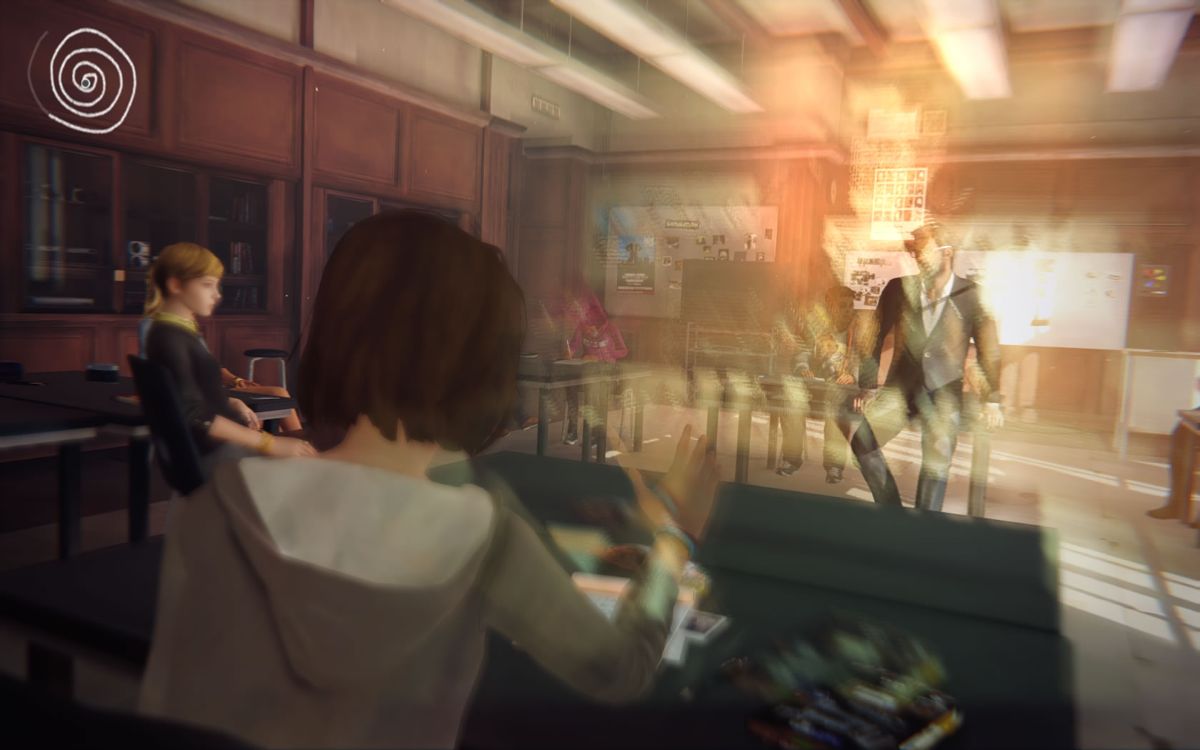
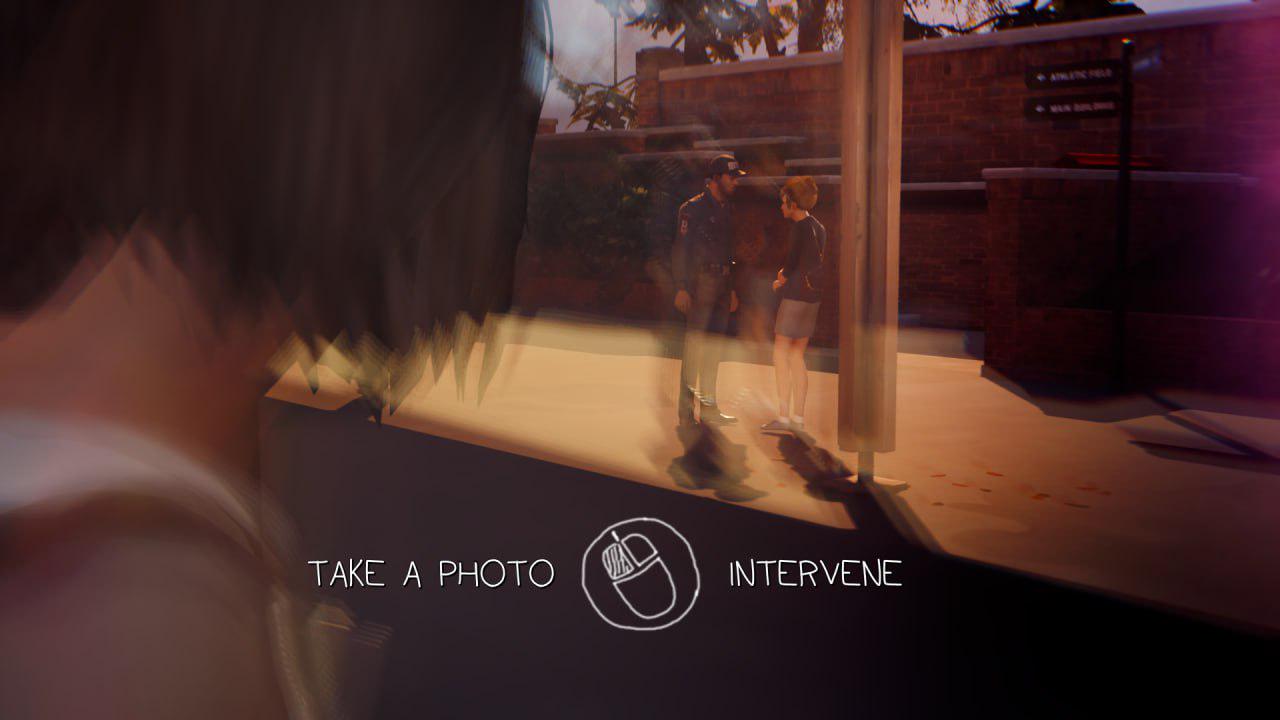
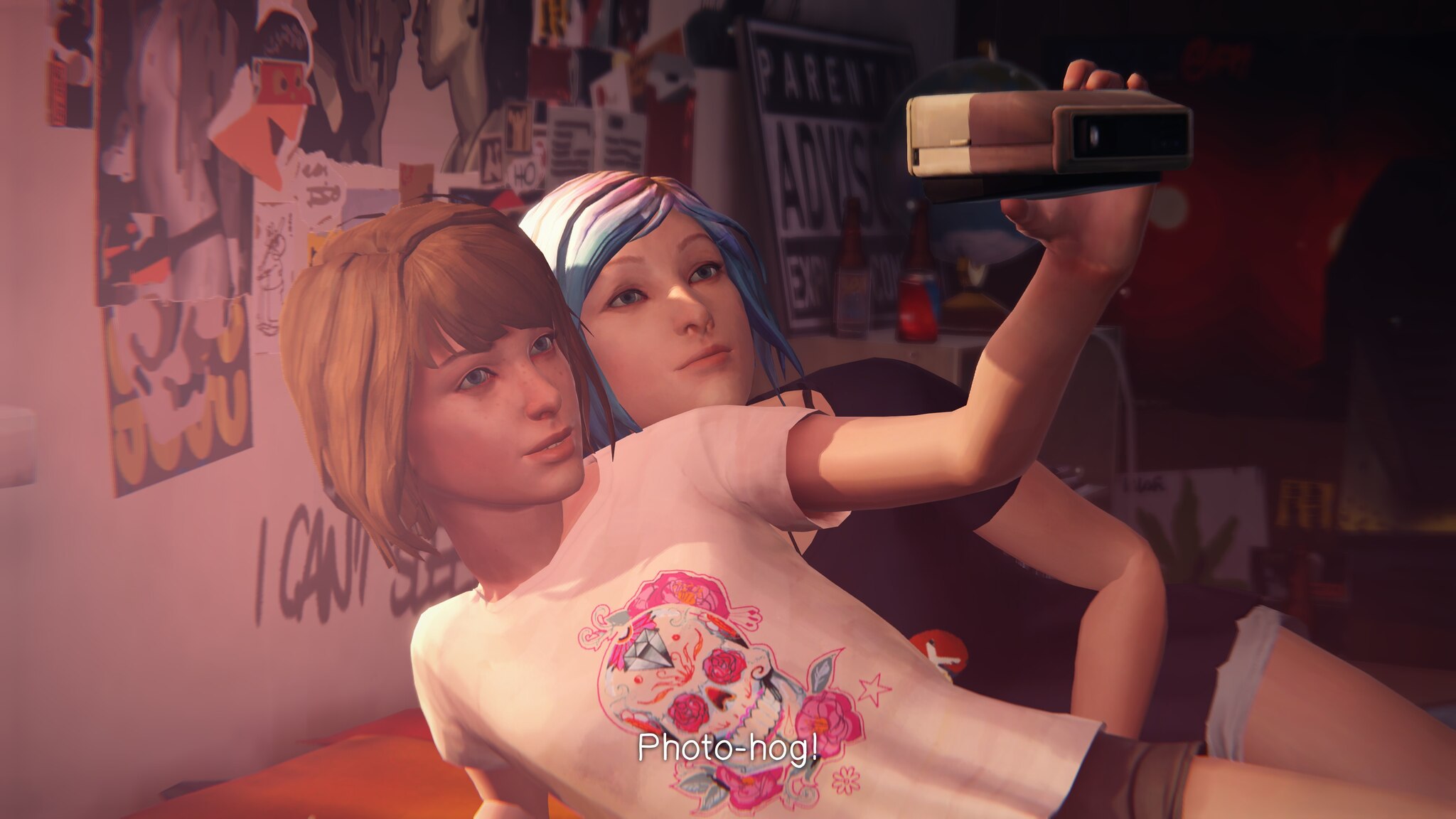
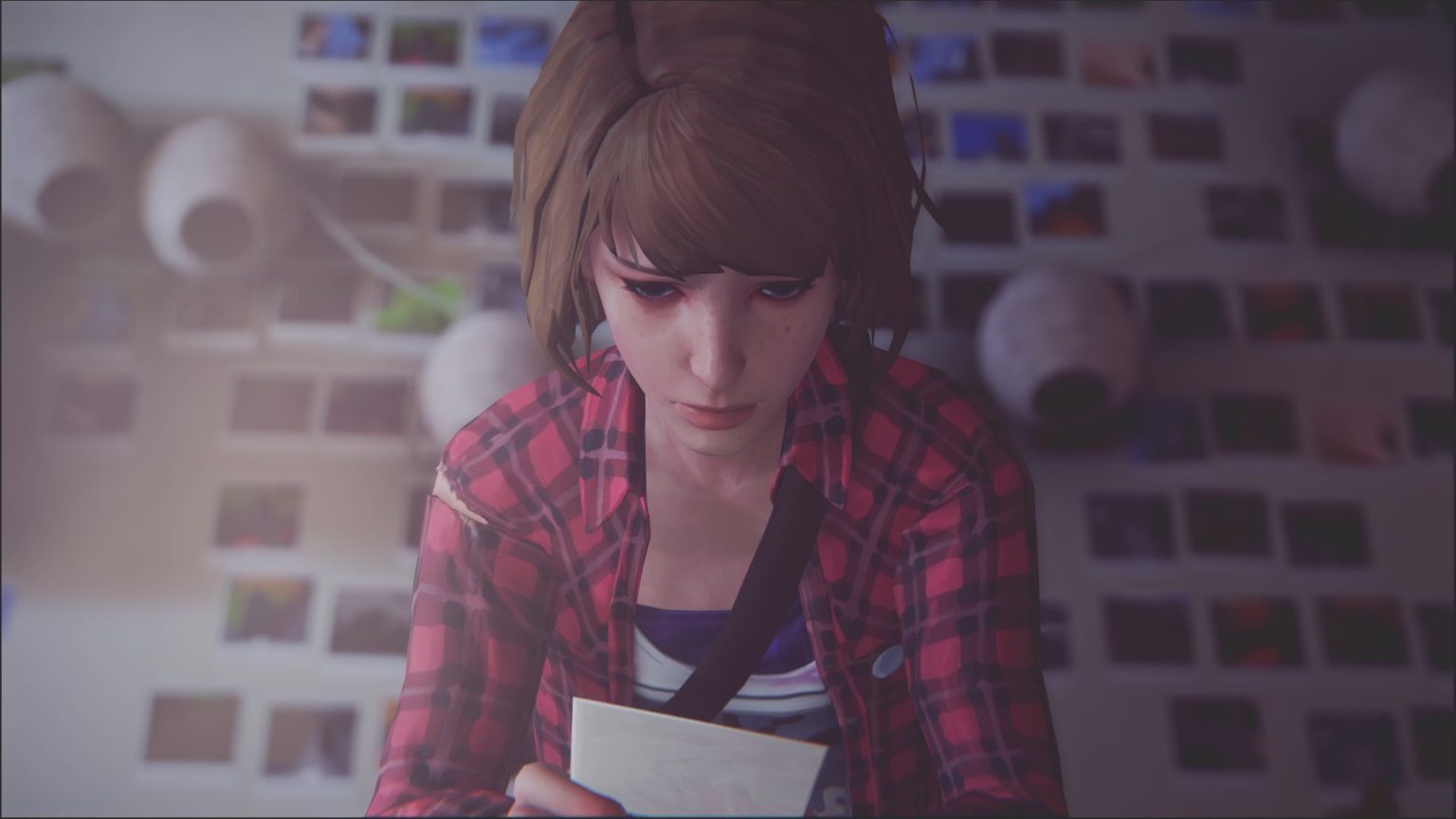
Max uses a Polaroid camera, which is considered retro in the in-game year of 2013. She often talks about her preference for analog media and her deep appreciation for physical film. She also has a tendency to look back into the past, much of her commentary around the town of Arcadia Bay referencing what she remembers of growing up in the town with her best friend before her family moved to Seattle. Not only that, she is known by her peers for taking ‘selfies,’ and is someone who tends to rather focused on how she appears to others.
Is it any wonder, then, that her supernatural power of time travel only goes backwards — and that, later in the game, she discovers she can return to a more distant moment in the past via her own photographs? She finds herself desperate to fix tragedies that have happened in the past, but in doing so inevitably causes a butterfly effect that threatens the entire town in the present.
The very first photograph the player takes in the game becomes pivotal as it allows Max to potentially change the entire fate of Arcadia Bay — and her star-crossed, now grown-up best friend Chloe Price — though not without giving up a significant part of her past one way or the other.
That Polaroid camera and the photographs it produces repeatedly underlines the narrative’s themes and Max’s characterization, drawing a direct line between abstraction and materiality. It’s what helps root the otherwise impossible story in something grounded and emotionally real: that desire to hold on to the past confronted with the need to let some things go.
Lost Records: Bloom & Rage
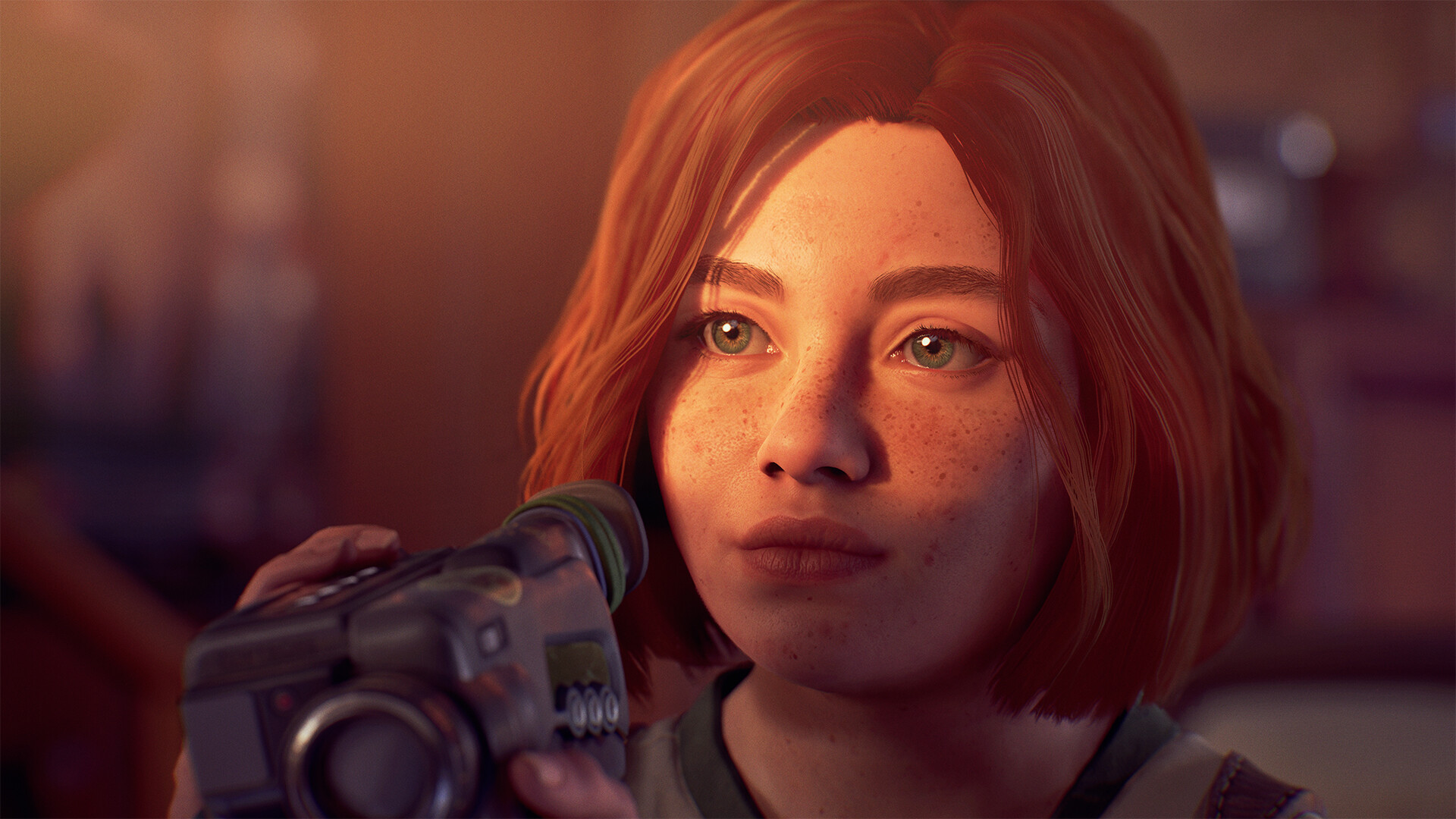
The player doesn’t immediately know that Swann Holloway has a love for her camcorder, because she doesn’t have it in the first scene. However, the game doesn’t need to express this in the narrative — the developer and publisher screens that come before the title menu show off a 1990’s-style tape filter with that distinct blue background. It sets the stage of what the title means by “records;” tape recordings of a forgotten yet unforgettable summer in 1995.
What is immediately apparent is that something happened in 1995 that is coming back to haunt Swann and her friends from that summer, and they’re meeting in the small lakeside town of Velvet Cove in the upper peninsula of Michigan where they grew up after being apart for nearly thirty years to finally remember what they have inexplicably forgotten. So, again returns the theme of looking back, though the supernatural touch isn’t about time travel… exactly.
(There’s an entire other essay about how the strange phenomenon of the Abyss does in fact have a lot to do with time, but I’m leaving that out for now.)
The camcorder is introduced as a material object as the game returns to 1995, when Swann was sixteen years old and about to meet the three girls her age (Nora, Autumn, and Kat) who’d become her closest friends. The other girls intervene when Swann is accused by Kat’s older sister of using her camcorder inappropriately and thus confronted by her rude and aggressive boyfriend, and the friendship begins alongside the creation of their punk-rock band that Kat would later dub “Bloom & Rage.”
The game proceeds to switch back and forth between 1995 and 2022. While in the past, players listen to the voice-over of the present-day women as they reminisce on the events of that summer in the process of unraveling the mystery of the thing they need each other’s help to remember.
A poignant piece of this storytelling is all about perspective. Young Swann is viewed in third-person for most of the game. The player can even choose different outfits for her to wear since they will be visible, and her emotions are frequently shown.
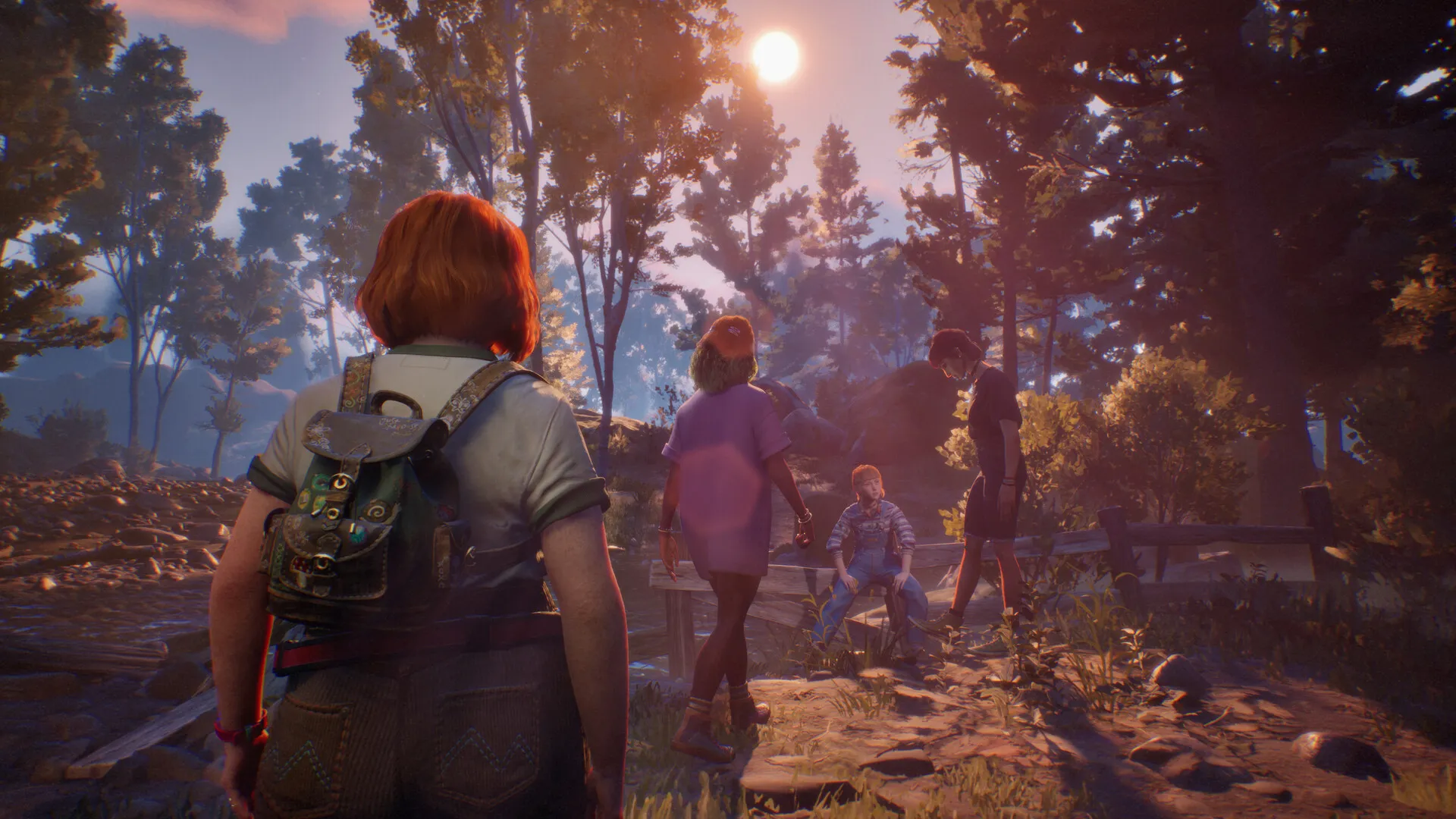
In 1995…
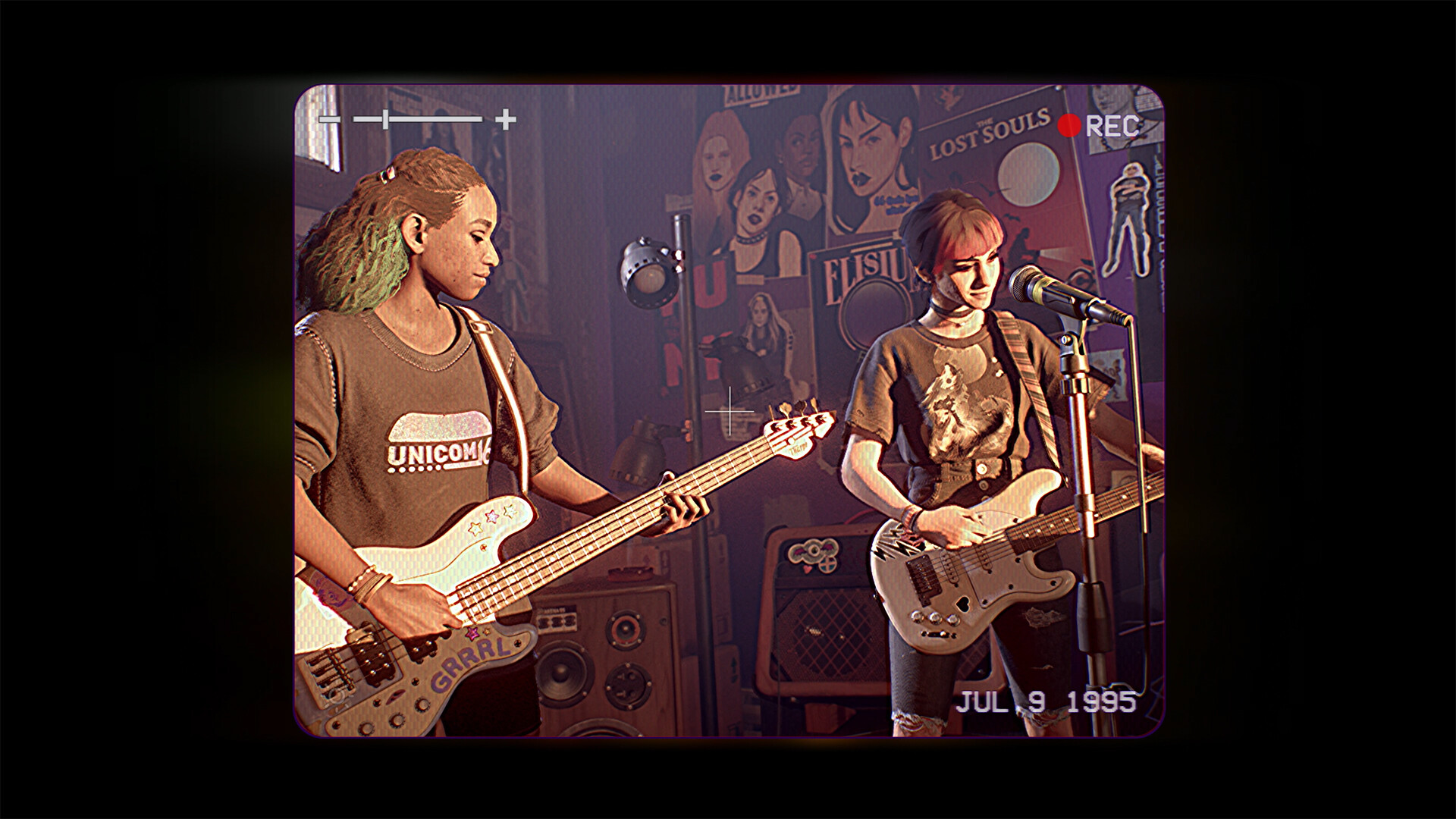
Camcorder view
The only moments in which the scenes in 1995 are in first-person are when young Swann uses her camcorder, which is when the player can record pieces of the memoir she’s trying to make of her life in Velvet Cove before her family moves to Canada.
The scenes in 2022 take place in first-person, directly in the shoes of Swann Holloway. Does the player get a chance to see Swann from another perspective in 2022? Yes, but not until late — when the characters have uncovered enough for her to be reunited… with her old camcorder.
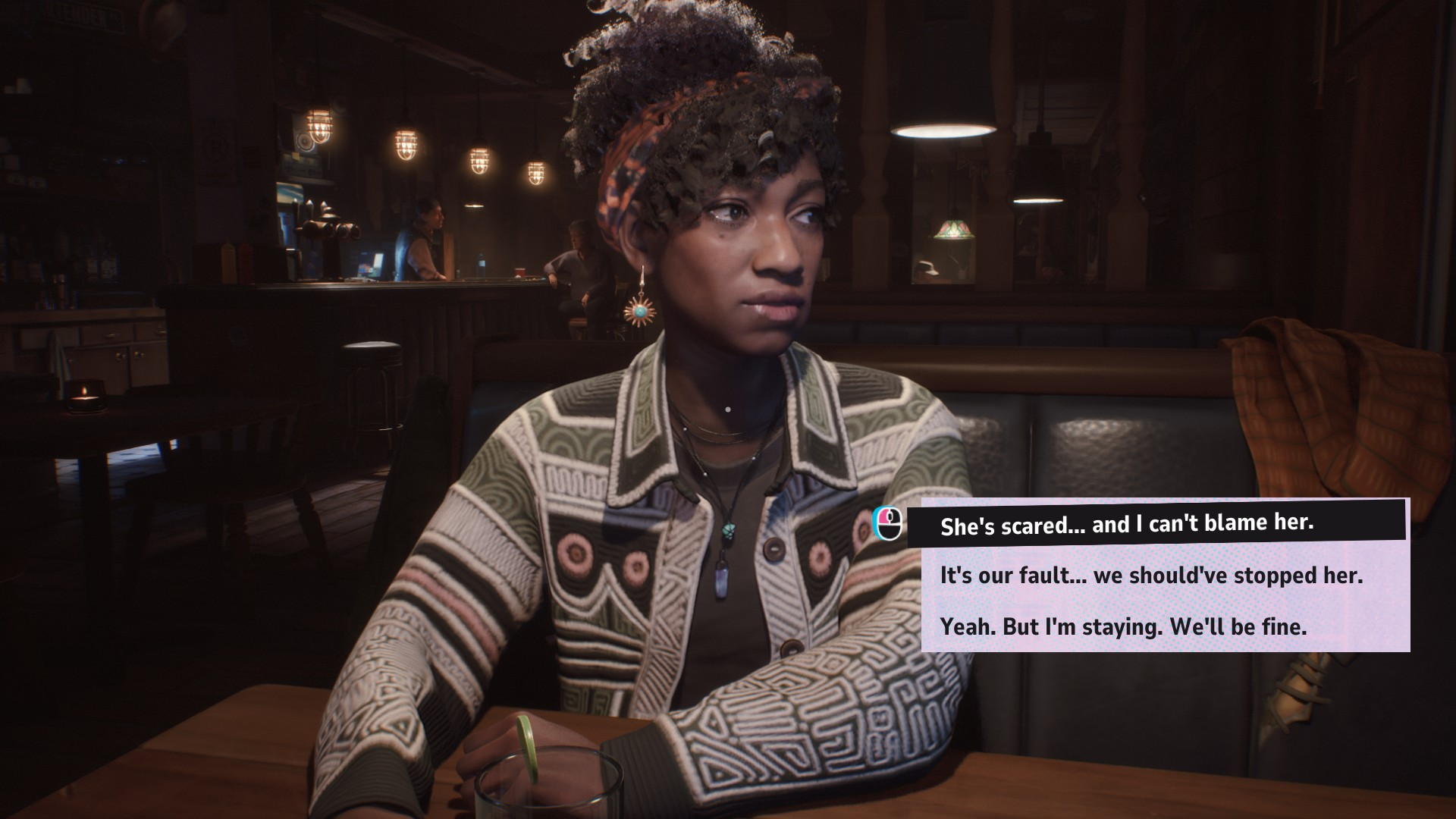
…in 2022
The camcorder isn’t just a side mechanic in the game, but a key to understanding the protagonist’s state of mind and differentiating different parts of the story. A story that revolves almost entirely around the memory of a single period of time for the characters involved, recorded in a teenager’s lost memoir.
Final Word
As mentioned earlier, Don’t Nod isn’t the only video game developer to delve into the camera-as-memory narrative device. Season: A Letter to the Future (2023) from Scavengers Studio follows a protagonist who is trying to leave behind a record of her world for the next generation, faced with the prospect of everything she knows being wiped away. Martha is Dead (2022), a horror game by developer LKA, utilizes a realistic depiction of a 1940’s-era camera to document clues surrounding the game’s mystery — but also to explore how tragedy distorts memories.
With video games having a particular edge when it comes to putting the player in a character’s shoes, the opportunity to look through a lens beyond the screen opens up entire worlds of meaning.
